Ultrasonic cleaning:Precision through cavitation
Where the highest purity is required, visible cleanliness is not enough. Ultrasound cleaning uses physical effects to gently remove even the finest residues – efficiently, reproducibly, and validated.
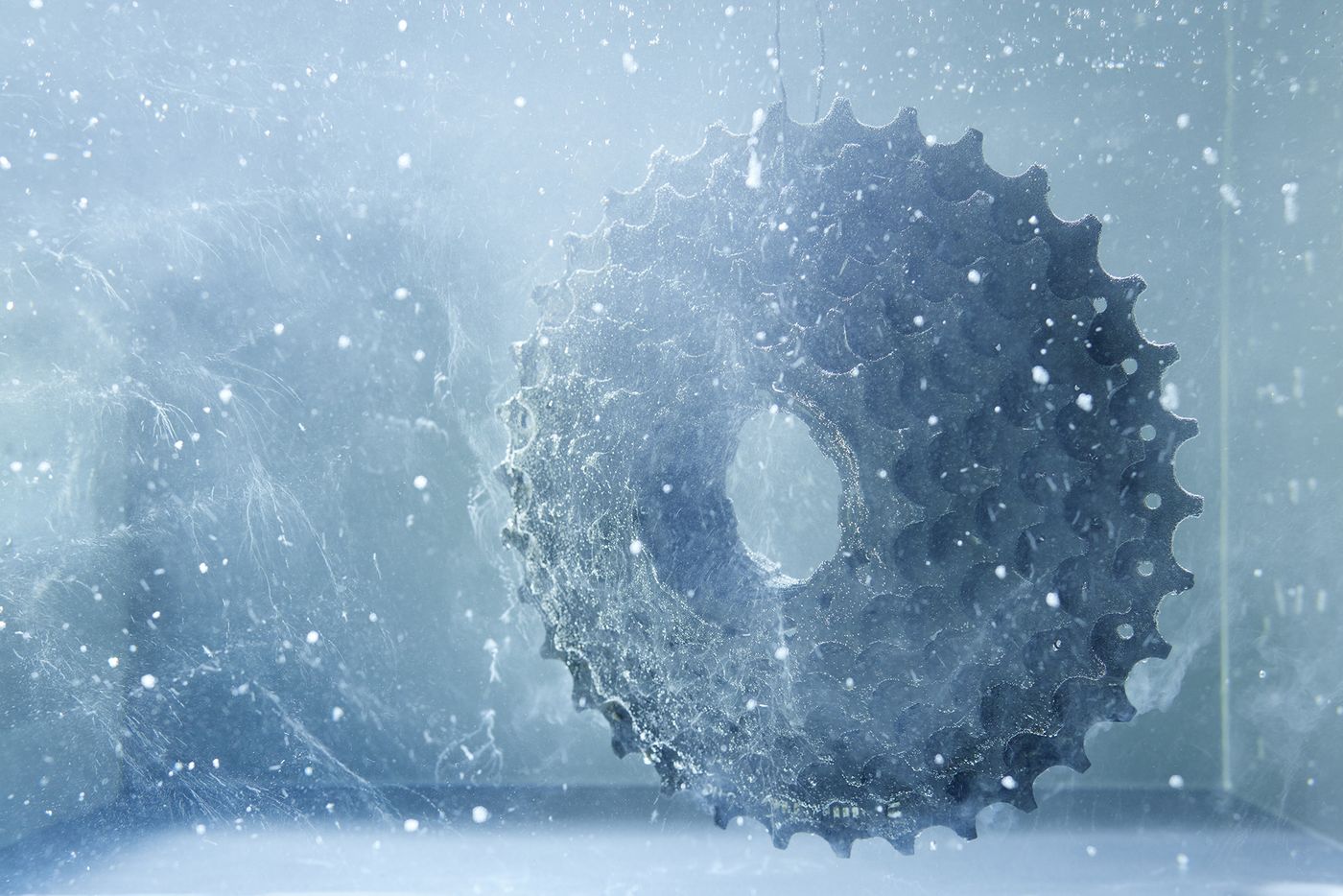
Cavitation through ultrasoundfor maximum cleaning power
In labor, production, or medical technology, visible cleanliness is not enough. Residues such as fats, polishing pastes, or proteins can disrupt processes or violate standards - especially in fine structures. When used correctly, ultrasound enables not only cleaning but also emulsifying, homogenizing, and passivating.
The solution: ultrasonic cleaning through cavitation. This creates microscopic bubbles in the cleaning medium, which generate high-energy pressure impulses upon collapse – effectively removing even stubborn particles from pores, holes, and gaps. Thorough, contactless, and reproducible.
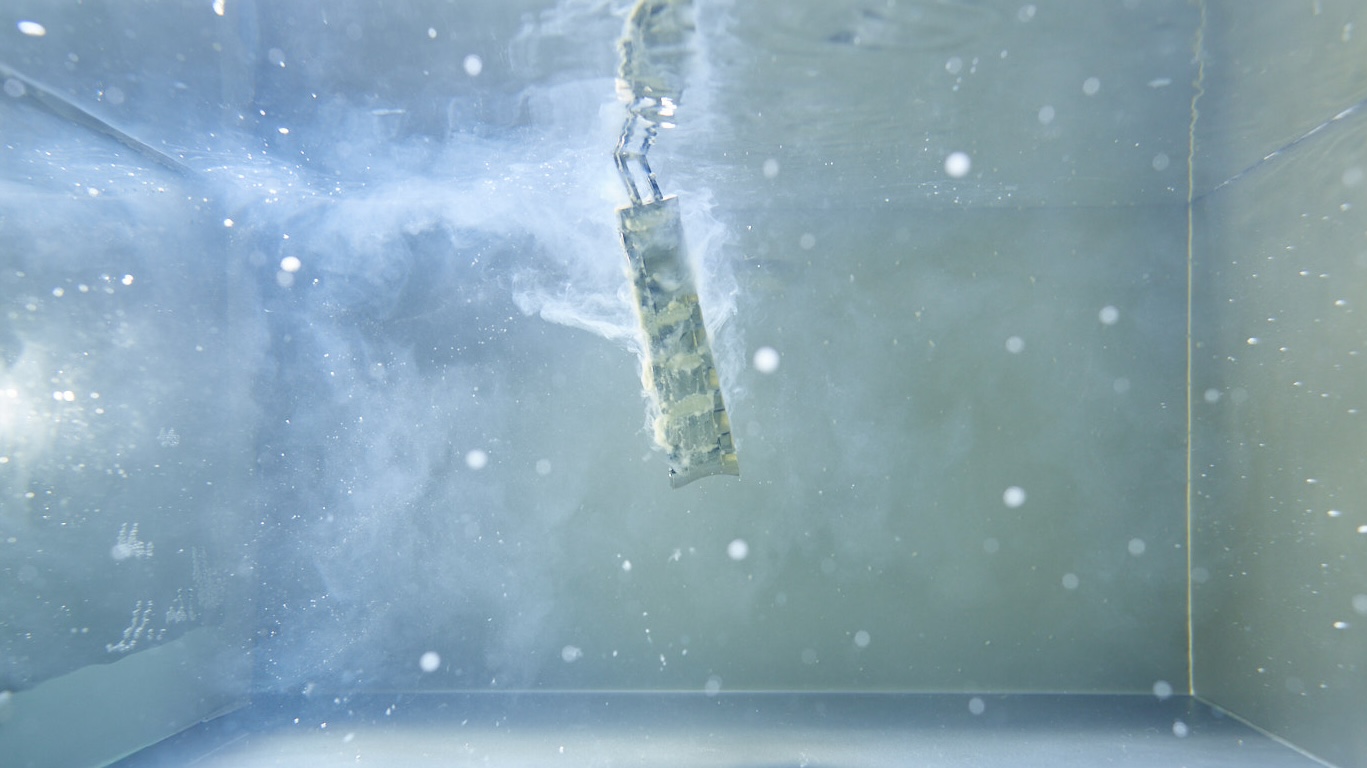
Fascination Cavitation
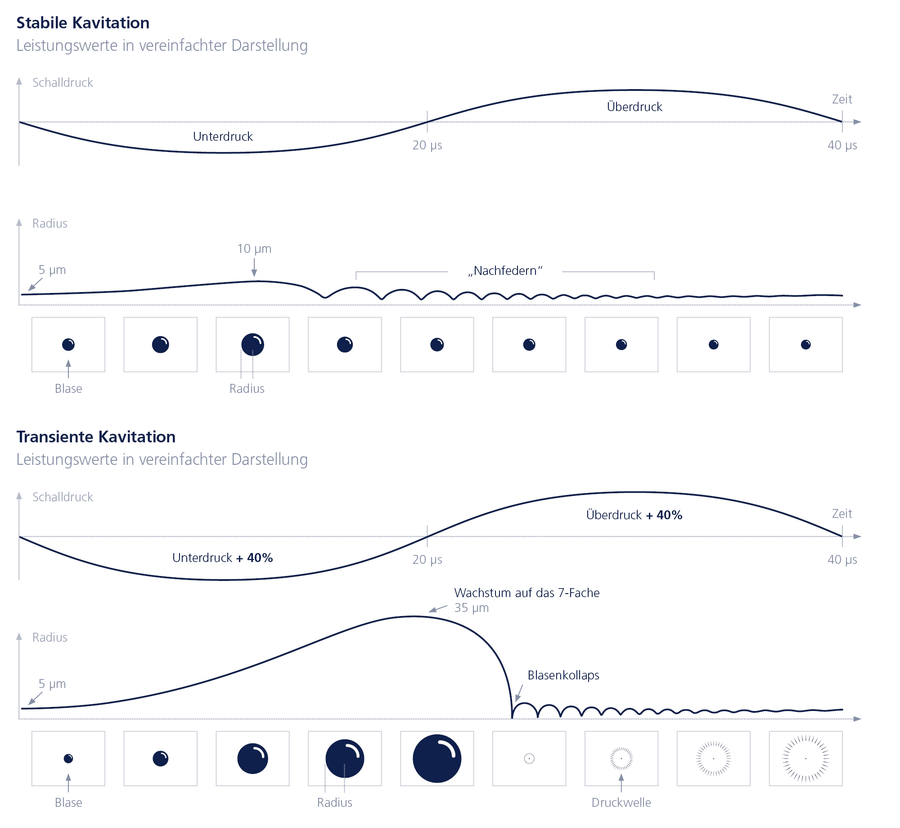
In the ultrasonic bath, microscopic bubbles are created through the alternating sound overpressure and underpressure, which expand and then collapse. Cavitation occurs in two forms: stable and transient cavitation. These processes occur millions of times per second - contactless and gentle on materials. You can find more about the physical principles in our specialist brochure "Fascination of Cavitation".

The correct ultrasound frequency – as gentle as necessary, as powerful as possible
The material, geometry, and contamination of the components determine how they need to be cleaned. In addition to cleaning medium, temperature, and time, the appropriate ultrasonic frequency is crucial for optimal results.
Low frequencies (25–40 kHz) generate large, energy-rich cavitation bubbles – ideal for robust surfaces and heavy contamination such as oil, polishing pastes, or rust. High frequencies (80–130 kHz) clean much more gently and are suitable for sensitive materials and fine structures, such as in electronics or medical technology.
The precise frequency selection ensures thorough, material-preserving cleaning and reproducible results.
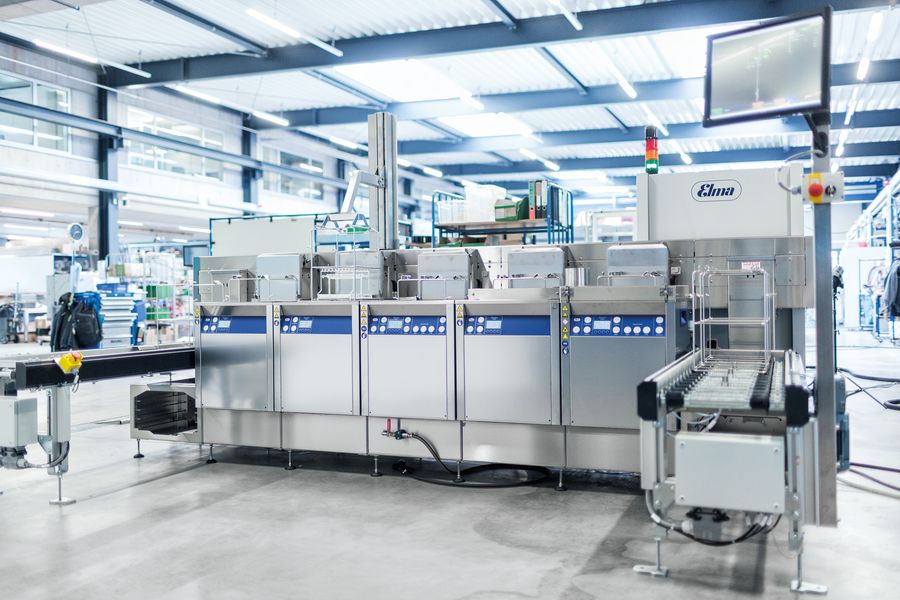
Clean, rinse, dry – with system
An ultrasound process is more than just cleaning. In many industries – e.g., medical technology – structured multi-step processes are crucial:
- pre-cleaning with coarse frequency
- multi-stage rinsing with ultrapure water
- passivating & drying with hot air or vacuum
Elma systems are designed for these requirements – automated, verifiable, and documentable.
APPLICATION AREAS IN VARIOUS INDUSTRIES

Medical technology & Dental
Hygienic safety for the highest standards

Labor & Research
Analyses, approaches, apparatuses – ultra clean

Watches & Jewelry
Finest precision meets gentle cleaning.

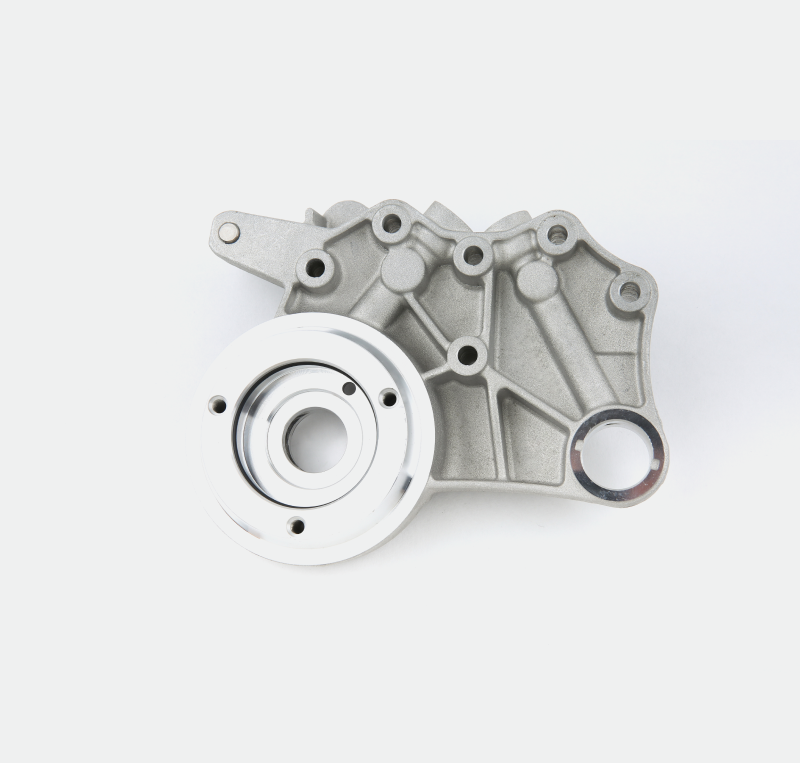
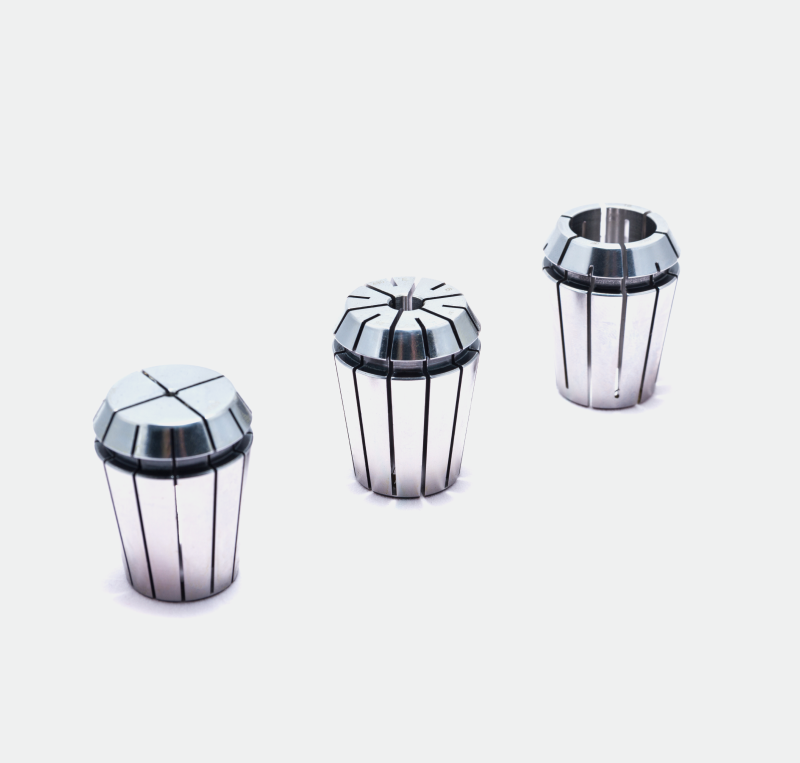
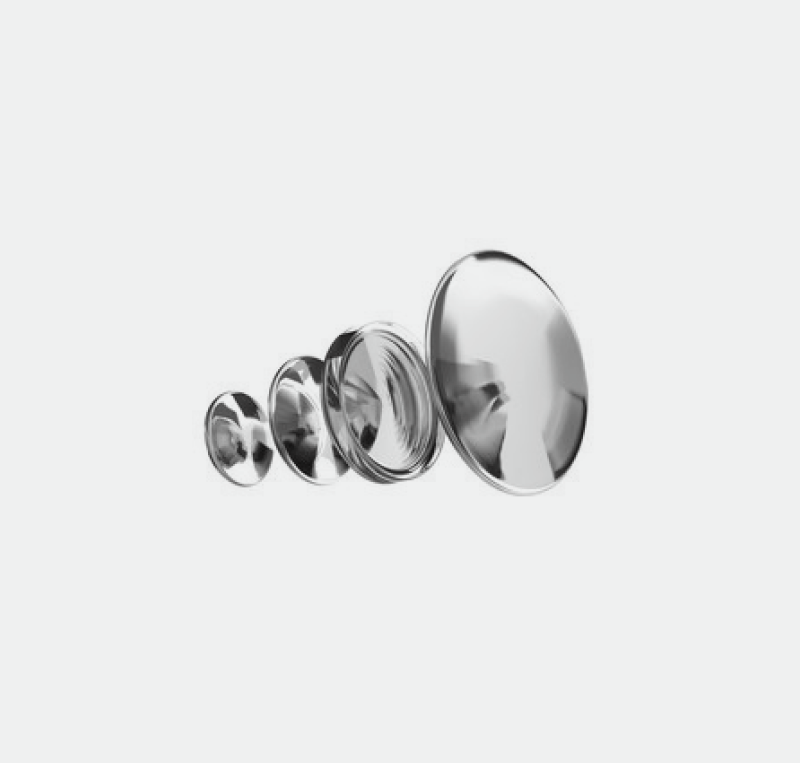
Optics & Precision Mechanics
Material purity on a microscopic scale

Metal processing
Deburr, clean, polish – systematically

Electronics & Semiconductors
Cleanliness on the nanoscale
Chemistry as a key parameter
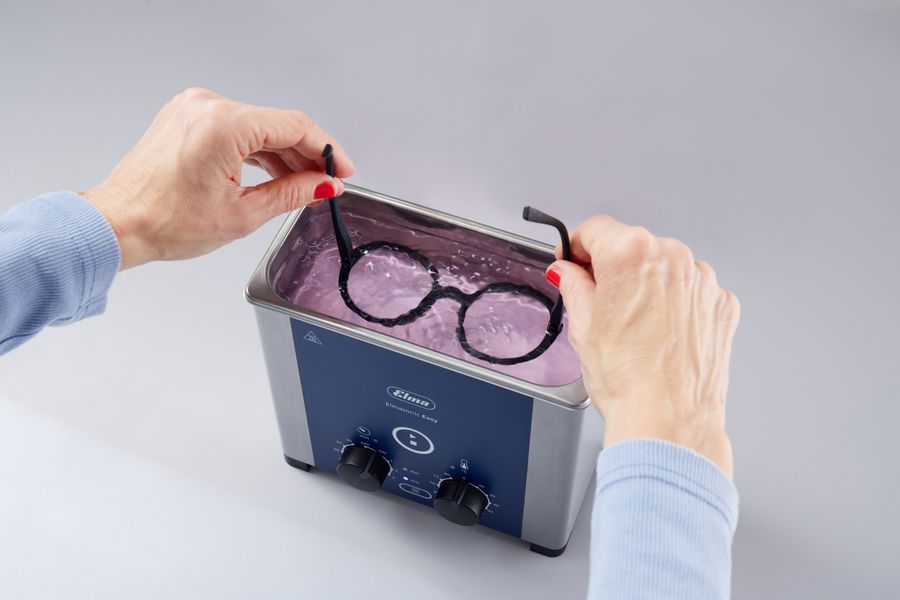
Cleaning efficiency depends not only on mechanics and temperature but also on the right chemistry. Elmaclean cleaning chemistry is specifically tailored for ultrasonic processes. The included surfactants lower the surface tension and thus promote the cavitation effect. The media are material-compatible, residue-free, and effective against fats, oils, polishing pastes, and proteins. The device and chemistry form an optimally coordinated system.
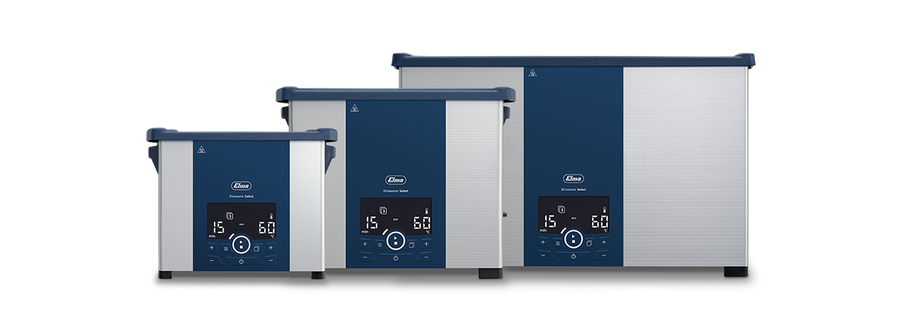
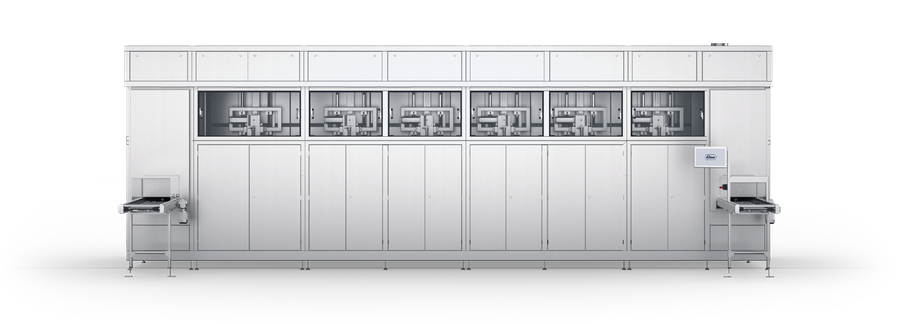
From the tabletop device to the process plant
Application areas
Competence that makes an impact

Over 75 years of experience in cleaning technology.

Own chemistry and process engineering

Development & Manufacturing in Germany

Personal support & technical service
„"Being a technology leader means for us: developing solutions that our customers in over 80 countries can rely on – for stable processes and the highest cleanliness."”
David Holly, Leading Ultrasonics Scientist and Principal Engineer
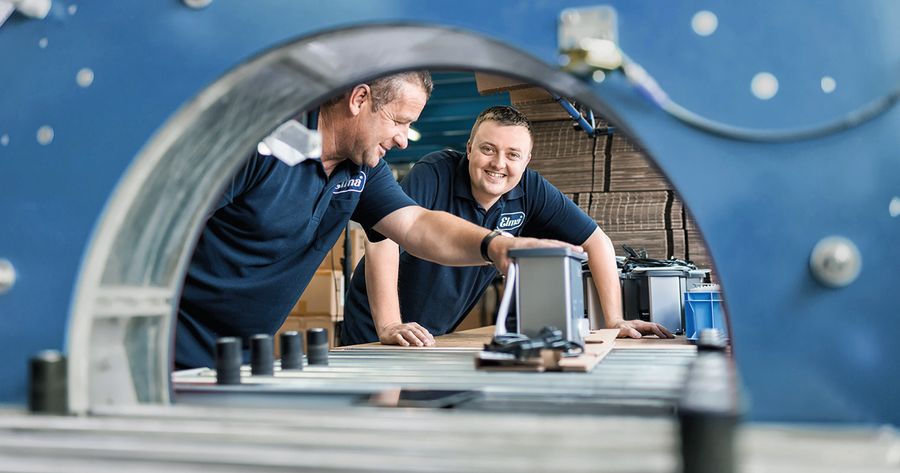
Sure. Reproducible. Validatable.
In many applications, it is not only important that cleaning is done - it must be demonstrable. Elma supports you with structured qualification processes for your ultrasonic cleaning devices and systems. Our service: Technical documentation & qualification protocols; support for factory acceptance, commissioning & validation; training & checklists for your quality control teams; this makes ultrasonic cleaning a traceable process component - also for GMP, MDR, FDA, or internal audits.
YOUR CHALLENGE – OUR SOLUTION
Whether series production, laboratory or medical technology - We analyze your cleaning task and develop the appropriate process solution together with you. Precisely coordinated, verifiable, and ready for use.